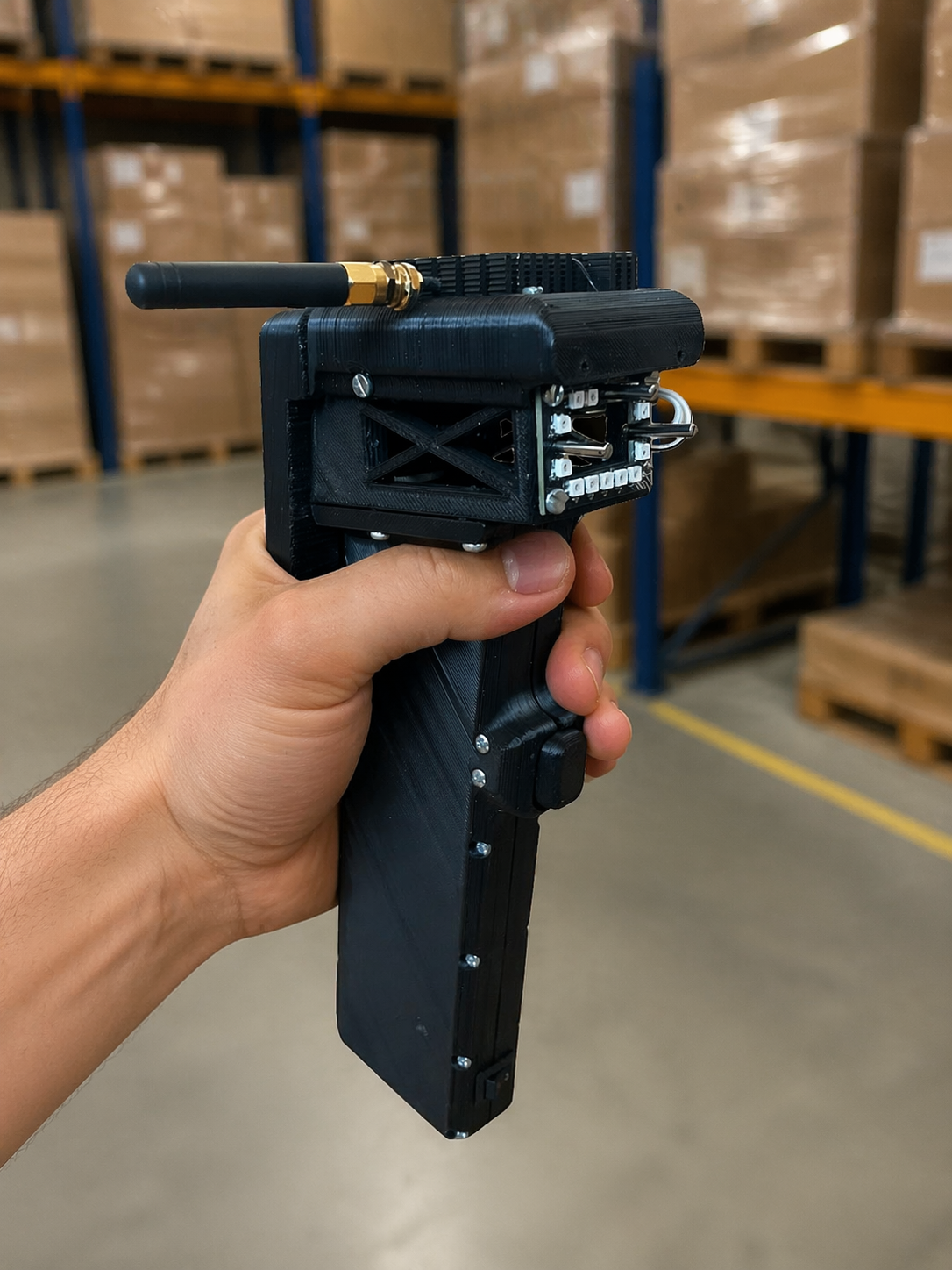
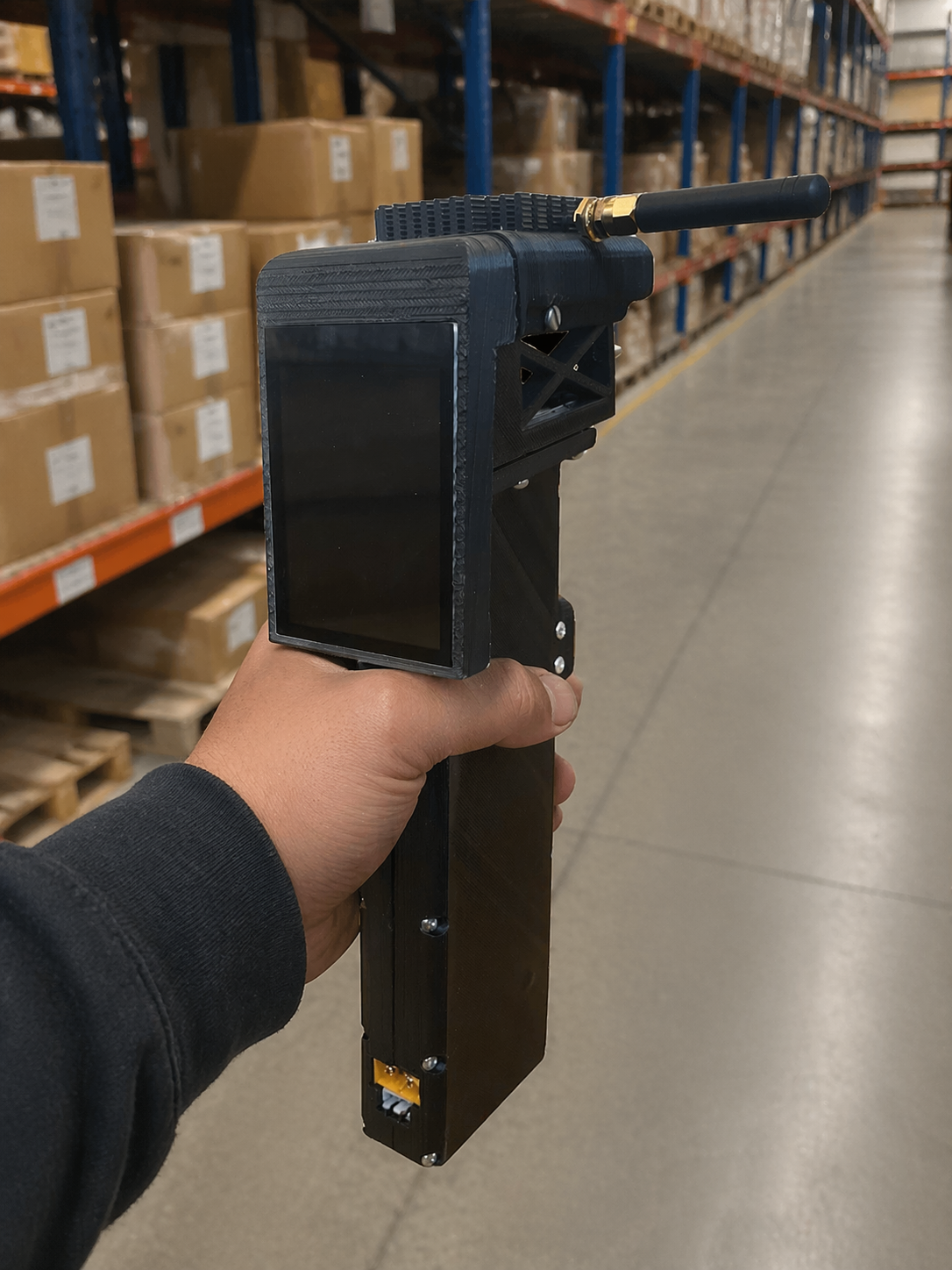
Most scanners need a clean barcode. OneScanner needs none. It captures the identifiers already present on the product — embossed, engraved, worn or unconventional — and turns them into structured inventory data. The first application is tire traceability through DOT code scanning, with recognition that can be adapted to new code types. No barcode. No manual entry. Just point and scan.
Many products carry embossed, engraved or otherwise non-standard identifiers that conventional barcode scanners cannot read. Warehouses fall back to manual transcription — slow, error-prone and unscalable. Tires are one concrete example: their DOT code is embossed directly into rubber, invisible to laser scanners, yet critical for compliance. The same recognition approach can be trained around different code families and surface markings.
Embossed and engraved characters are not readable by standard barcode workflows, leaving teams without reliable automated capture.
Warehouses with 10,000+ SKUs rely on human operators to read and type codes. This creates inventory errors, slows throughput and blocks digital traceability.
Regulations require verified product data at every step. Without automated code capture, compliance becomes guesswork.
OneScanner reads non-standard identifiers that barcode scanners miss — embossed, engraved, worn or unconventional. It is adaptable across industries, with DOT code scanning for tire traceability as the first application and support for new code formats through configuration and training. Point it at the product, capture what is already on the surface, and turn it into inventory-ready data. No labels. No reprinting. No manual entry.
The first market. Tire distributors and retail chains handle thousands of SKUs with nearly zero automation at the unit level. OneScanner brings full traceability through DOT code scanning while keeping the same scanner platform adaptable for other code formats later.
Each scan delivers complete, structured product information automatically — no manual lookup, no entry.
Operators choose the operation mode on the scanner. Each scan generates a timestamped inventory event, logged automatically.
Tire regulations require verified product data at the point of handling. OneScanner captures and stores that data automatically, per scan.
Any warehouse storing items with non-standard, embossed or unconventional codes — cables, hydraulic components, industrial parts — is a candidate for OneScanner. The recognition layer can be adapted for virtually any kind of product code where the marking is visible enough to capture.
Many industrial parts carry embossed serial numbers, cast codes or laser-engraved identifiers that standard scanners miss entirely.
The device is designed for warehouse floors: dusty, poorly-lit, high-throughput environments where scans need to keep moving.
OneScanner can be configured for new code formats — DOT codes, serial numbers, batch codes, cast marks and other visible identifiers — without changing the core device.
OneScanner captures non-standard product identifiers and converts them into structured inventory data. It is built to support real warehouse workflows today, starting with DOT code scanning for tires, and can adapt to other industrial code formats and visible markings over time.
OneScanner is designed for identifiers that conventional barcode scanners miss: embossed, engraved, worn or printed directly on the product.
Each successful scan creates a structured record that can be used in your inventory workflow, dashboard, WMS or ERP integration.
The same device concept can support different code families and industries, beginning with tire DOT codes and expanding to virtually any visible code format where needed.
Handheld industrial scanner for capturing DOT codes directly from tire sidewalls and turning each scan into a usable inventory event, with a recognition approach that can be adapted to other code types.
The scan flow can be built around your specific warehouse use case, whether that is stock-in, stock-out, verification, picking, returns, or tire traceability.
Each scan can produce structured records for your WMS, ERP, or a dedicated OneScanner management platform, including product ID, scan time, operation type, and export-ready data.
Whether you manage a tire distribution network, an industrial parts warehouse, or any operation with non-standard codes that need reliable capture — get in touch. We're looking for pilot partners and integration opportunities.